

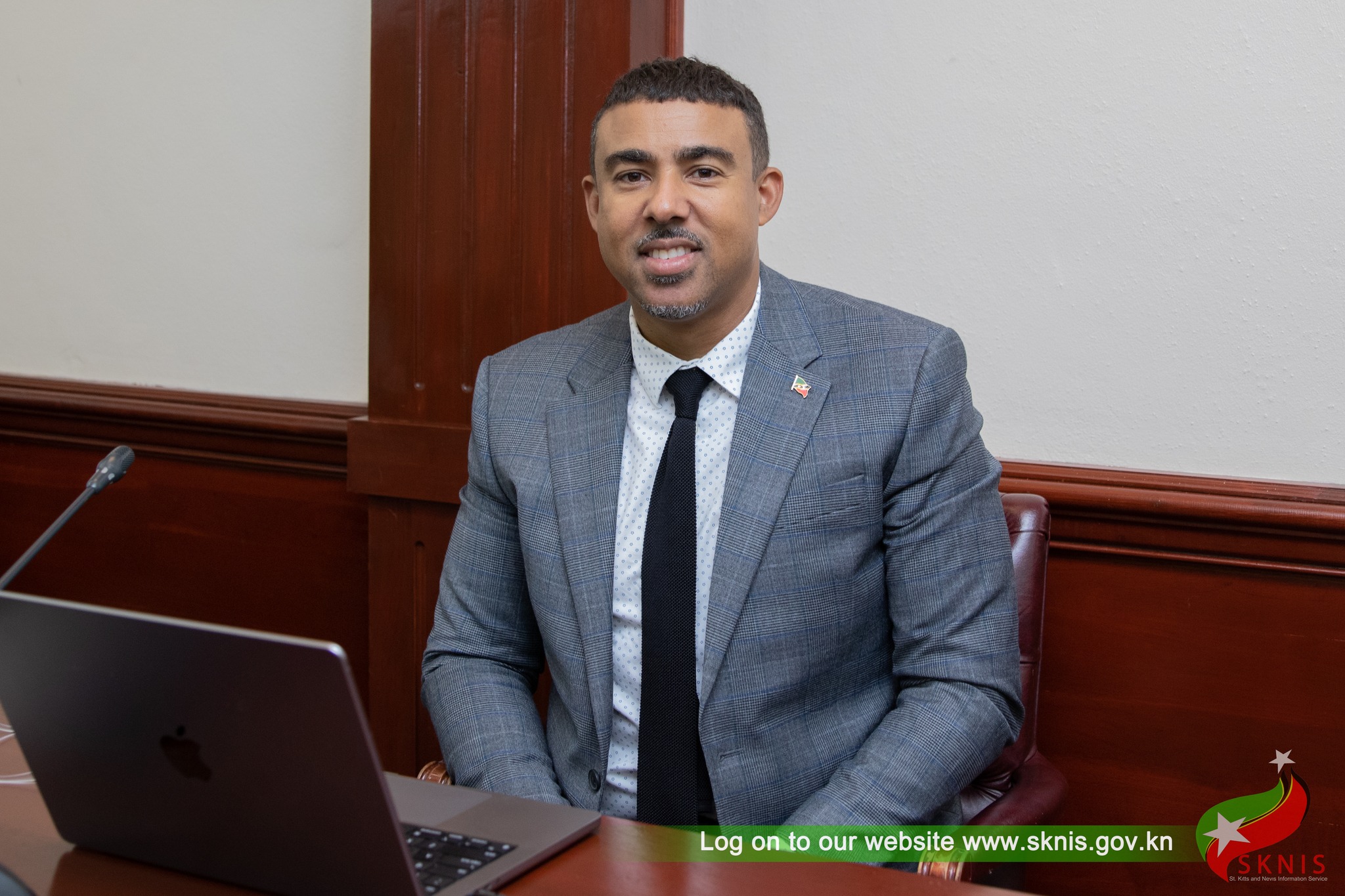
Basseterre, Saint Kitts, March 31, 2026 (PMO) — Attorney General and Minister of Justice and Legal Affairs, Hon. Garth Wilkin, has provided a detailed explanation of the Government’s position on cannabis legislation, outlining why full legalization is not currently feasible for St. Kitts and Nevis due to significant international financial and legal constraints.
Delivering a statement in the National Assembly on March 31, 2026, Attorney General Wilkin emphasized that while the Government has implemented progressive reforms, particularly in recognizing religious freedoms and decriminalizing certain aspects of cannabis use, these measures must remain aligned with international obligations.
He explained that St. Kitts and Nevis is bound by international treaties that restrict the full legalization of cannabis for non-medicinal and non-religious purposes, and that any deviation could have severe consequences for the Federation’s financial system.
“What that means is that if we were to legalize, our corresponding banking relationships would almost come to an end,” he warned.
The Attorney General further elaborated that the country’s participation in the global financial system depends heavily on correspondent banking relationships with institutions in the United States, Europe, and other major economies, jurisdictions where cannabis remains illegal.
“So if you were to make money from cannabis in Saint Kitts and Nevis, and those countries were, those banks were to realize that anybody in Saint Kitts and Nevis could legally make money from cannabis, they would cut off our banking system from the International Finance System,” he explained.
He noted that such an outcome would have far-reaching consequences, affecting everything from international trade to the ability of citizens to conduct basic financial transactions abroad.
“It would cause irreparable harm to our banking system,” the Attorney General stressed.
Against this backdrop, Mr. Wilkin highlighted the Government’s structured approach, which includes the establishment of a comprehensive legal framework encompassing religious use, freedom of conscience, and a regulated medicinal cannabis regime.
“The New Cannabis regime legalizes religious and freedom of conscience, cultivation, possession and use of cannabis,” he explained, noting that the Constitution protects freedom of conscience, including religious freedom.
He also pointed to the extensive public education efforts undertaken by the Government, including the launch of an official cannabis information platform designed to help citizens understand their rights and responsibilities under the law.
The Attorney General ended by encouraging all citizens to familiarize themselves with the legal framework and to comply fully with the regulations, emphasizing that the Government’s approach reflects a careful balance between reform and responsibility.