

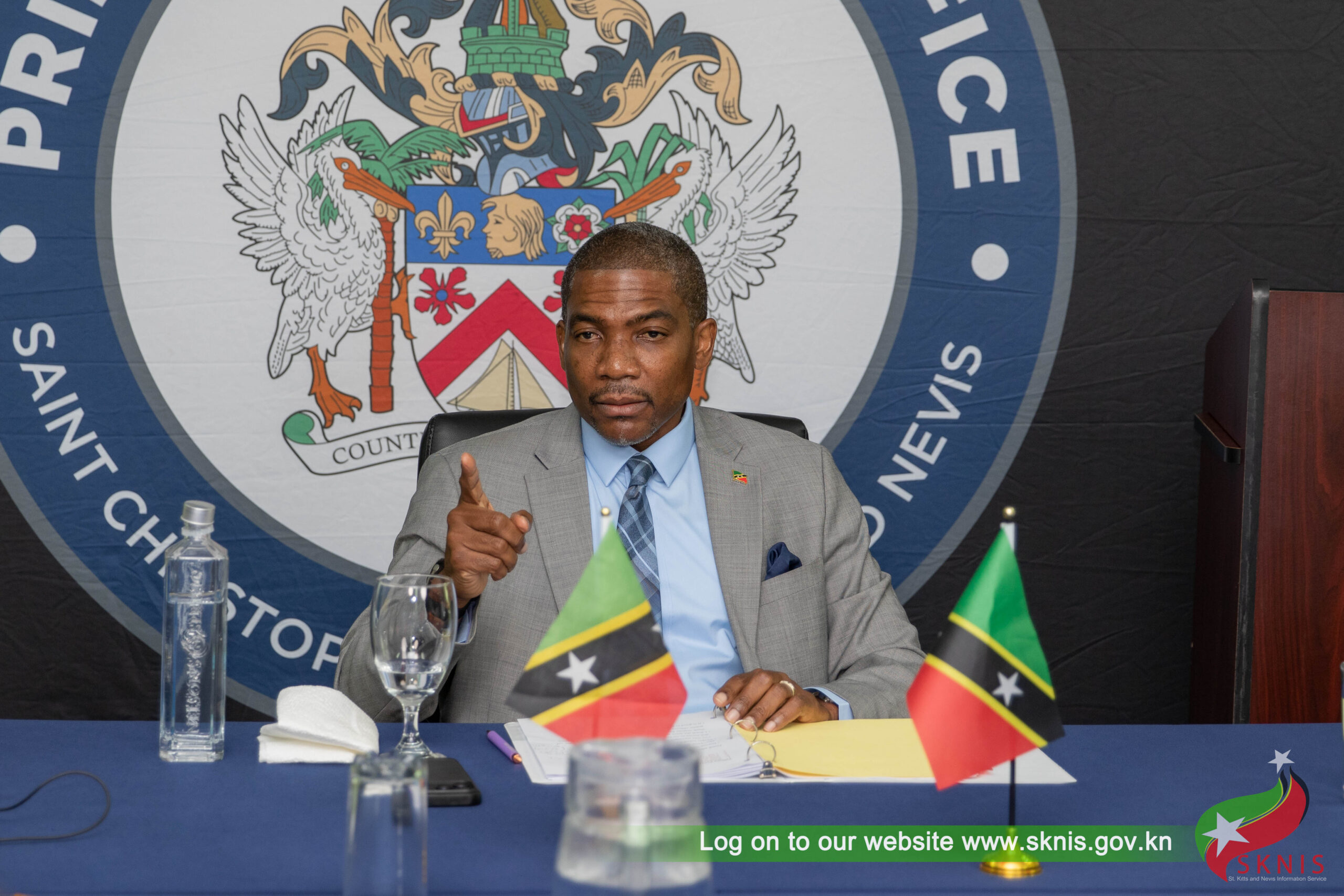
Basseterre, St. Kitts, November 6, 2026 (PMO) — The Government of St. Kitts and Nevis continues to absorb part of the cost of fuel and electricity to ease pressure on household budgets.
Speaking at The Roundtable on Thursday, November 5, Prime Minister, the Honourable Dr. Terrance Drew, said the government has used subsidies, tax relief and direct assistance to help families manage the cost of keeping the lights on, getting to work and putting food on the table.
Prime Minister Drew shared that as a result of high manufacturing and shipping costs abroad, the price of goods continues to rise before they reach local shelves. Inflation, he noted, had been projected at 1% and was running at more than three times that forecast.
“Manufacturing costs gone up, shipping costs gone up, and the whole world is dealing with an inflation crisis. What does inflation mean? Things gone up,” Dr. Drew said.
On electricity, the Prime Minister said that by June he had reported more than EC$80 million in subsidies. He explained that the government covers the fuel variation cost and estimated that electricity bills would nearly double without that support.
The government has also used tax relief to ease costs at the pump. Under the relief package announced in April 2026, it reduced the excise tax on gasoline from EC$1.95 to EC$0.98 per gallon and cut the Customs Service Charge on gasoline from 6 percent to 3 percent. Dr. Drew shared that the excise reduction alone meant foregoing about EC$1.2 million in revenue.
“That $1.2 million would have been used for something else, but we forgo that so that when you shop to buy gasoline, you get it cheaper. Again, the government taking the lash for the people,” he said.
The Prime Minister said the government has also acted to give families more room in their budgets. He pointed to the increase in the minimum wage to EC$500 for a 40-hour workweek, higher pay for STEP participants, and EC$36.6 million in Budget Boost Wallet assistance for about 23,000 people in 2025. He also cited the temporary reduction in the standard VAT rate from 17 percent to 13 percent, additional discounted VAT days, and EC$250 in back-to-school assistance per eligible child.
“And lastly, I will say, the government is taking a lot of lash for you, the people, so you don’t get lashed, and we’ll continue to do so to protect you as much as possible,” the Prime Minister said.