

Abuja, Nigeria, March 27, 2026 (PMO) – Prime Minister Hon. Dr. Terrance Drew revealed that St. Kitts and Nevis joined global efforts at the United Nations to formally recognize the transatlantic slave trade as one of humanity’s greatest crimes, following the successful passage of a landmark resolution led by the President of Ghana, His Excellency John Mahama.
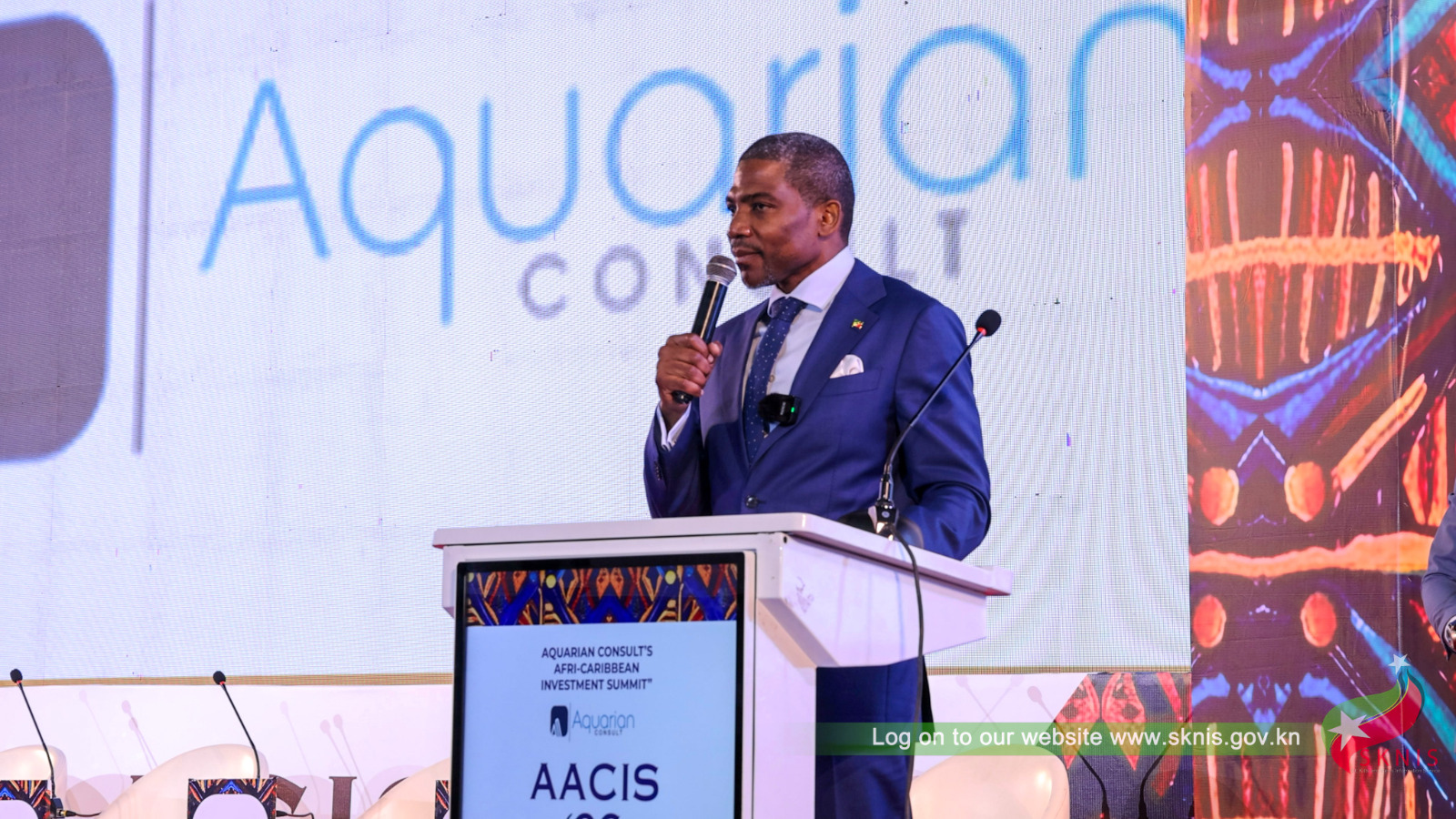
During his keynote address at the Afri-Caribbean Investment Summit in Abuja, Nigeria, on March 25, Prime Minister Drew underscored the significance of the resolution, which was tabled before the United Nations and received overwhelming international support, including unanimous backing from both CARICOM member states and the African Union.
“I want to highlight and to recognize His Excellency, the President of Ghana… He’s presenting today [March 25th] and tabling before the United Nations this very day… a resolution that recognizes the transatlantic slave trade as the worst crime ever committed by humanity,” the Prime Minister stated.
Dr. Drew confirmed that St. Kitts and Nevis stood firmly among the co-sponsors of the resolution, aligning with a unified Afro-Caribbean position on justice, remembrance, and global recognition. “St. Kitts and Nevis is a co-sponsor of that resolution and I’m waiting patiently and anxiously to hear that the resolution would have passed in the halls of the United Nations,” he said at the time.
The resolution has since been adopted, marking a historic moment in international diplomacy and moral acknowledgement. Prime Minister Drew emphasized that the outcome reflects the growing strength of coordinated advocacy between Africa and the Caribbean on issues of shared history and global justice.
The Prime Minister framed the successful passage of the resolution as part of a broader movement toward unity, justice, and strategic cooperation between Africa and the Caribbean. He noted that the alignment demonstrated through this initiative extends beyond economics into diplomacy and global policy, as both regions continue to work together to shape international narratives and outcomes that reflect their shared history and collective aspirations.