

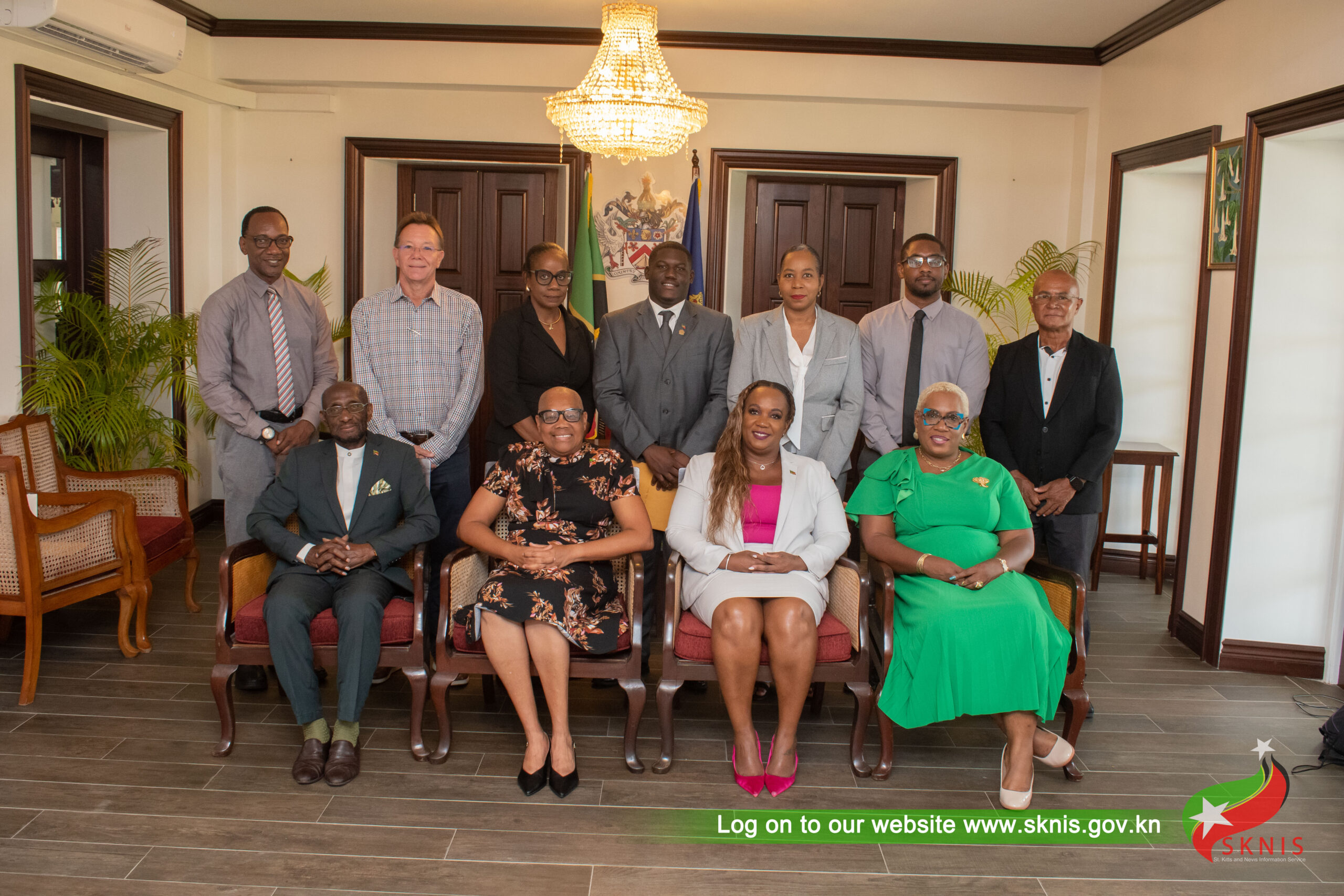
Basseterre, St. Kitts — The National Productivity Council marks the first anniversary of its swearing-in on July 8, 2025, and is using the occasion to update the public, workers, employers, and the business community on the work undertaken during its first year and the next phase of the national productivity agenda.
The Council is established under the National Productivity Council Act, 2024 (No. 3 of 2024), which mandates it to promote a culture of productivity, efficiency, and innovation across both the public and private sectors, to facilitate collaboration and the exchange of best practices, and to enhance productivity in the civil service and the wider workforce. By design, the Council’s membership brings together Government, the private sector, workers’ representatives, and the Eastern Caribbean Central Bank.
Since its swearing-in, the Council has convened 11 full Council meetings, and its working groups have held a further 27 meetings to advance the Council’s institutional, technical, legislative, research, and partnership-building work. Over the same period, the Council has engaged directly with the Economic Commission for Latin America and the Caribbean, the United Nations Industrial Development Organization, and the United Nations Conference on Trade and Development, and has built working relationships with productivity counterparts in Trinidad and Tobago and Saint Lucia, aligning its approach with the Eastern Caribbean Central Bank’s Big Push agenda.
The Council was established following recommendations arising from the national minimum wage review process. That process recognized a central national challenge: wage growth, worker welfare, business competitiveness, and productivity cannot be treated separately. Sustainable improvements in wages and living standards must be supported by stronger productivity, better skills, improved management practices, innovation, quality, public-sector efficiency, and firm-level competitiveness.
The National Productivity Council was therefore not created as a ceremonial body. It was established to help St. Kitts and Nevis address one of the most important economic and social issues facing the country: how to produce greater value, improve productivity and competitiveness, strengthen public and private sector performance, and support higher living standards in a sustainable way.
During its first year, the Council’s work has included:
• engagement with other regional productivity institutions, including counterparts in Trinidad and Tobago and Saint Lucia;
• reviewing legislative gaps and drafting the regulations needed to establish the Council’s Secretariat, serving as its Executive Unit, and to formally expand the Council’s purview to incorporate the functions previously carried out by the former National Competitiveness Council, which has been inactive since 2012;
• review of previous local and regional reports on productivity, competitiveness, labour markets, and economic development;
• engagement with technical assistance and development partners, including the Economic Commission for Latin America and the Caribbean, the United Nations Industrial Development Organization, and the United Nations Conference on Trade and Development, to identify the most appropriate technical support for the local context;
• work with the Economic Commission for Latin America and the Caribbean toward the design and support of a productivity benchmarking survey;
• ongoing engagement with the United Nations Industrial Development Organization on regional productivity cooperation;
• continued collaboration with the Saint Lucia National Competitiveness and Productivity Council and other regional productivity bodies;
• alignment of the Council’s work with national development priorities and regional economic transformation efforts, including issues highlighted in the Eastern Caribbean Central Bank’s Big Push agenda; and
• preparatory work toward a comprehensive, evidence-based national productivity policy.
The regulatory work to expand the Council’s purview is a significant step for the national productivity agenda. Since 2012, issues of business competitiveness, the ease of doing business, and firm-level performance have had no active national home, following the lapse of the former National Competitiveness Council. Bringing these functions formally under the National Productivity Council closes that gap. It allows a single national institution to address productivity and competitiveness together, rather than through separate and disconnected efforts, and ensures that the factors most directly affecting firm output, investment, and growth are treated as part of the same national agenda as wages, skills, and workforce development.
The Council acknowledges that much of this first-year work has not been highly visible to the public. This preparatory phase was necessary: improved productivity is critical to the Federation’s sustained growth, and something this important to the future of St. Kitts and Nevis could not be approached superficially. The Council’s position is that national productivity work must be grounded in credible, reliable data, evidence-based research, consultation, sound institutional arrangements, and practical solutions.
A major area of ongoing work is the development of a national productivity benchmarking survey, with technical discussions continuing with the Economic Commission for Latin America and the Caribbean. The purpose of the survey is to establish a clearer, data-driven picture of the current situation concerning labour productivity, labour-market opportunities, challenges, and gaps. The survey is also expected to help identify constraints affecting firm productivity, workforce development, management practices, technology adoption, innovation, training, operating costs, and public-sector processes that influence competitiveness.
This work is directly relevant to labour markets and economic competitiveness. Accurate productivity data can support better policy decisions on wages, training, education, business support, investment, labour market planning, public-sector reform, and national development. It can also help ensure that future
discussions on wages and worker welfare are informed by productivity data, business capacity, inflation, skills, and competitiveness.
The Council has also been engaging with the United Nations Industrial Development Organization on the possible development of a regional productivity framework. This work is intended to support greater collaboration among productivity councils and related institutions in the region, pool resources, attract technical support, and advance productivity issues connected to the wider regional transformation agenda, including the Eastern Caribbean Central Bank’s Big Push.
The Council’s second phase of work is expected to begin early in the fourth quarter of 2026. This next phase will move the Council into a more public-facing period of activity, organized around four broad areas of work.
First, institutional strengthening.
This includes the establishment of the Secretariat, completion of the necessary regulations and administrative arrangements, and the creation of a stronger platform for research, coordination, communication, and implementation.
Second, data and diagnostics.
This includes the productivity benchmarking survey, baseline research, and the collection of information needed to understand the real constraints affecting productivity in the public and private sectors.
Third, national consultation.
The Council will engage employers, workers, trade unions, business organizations, micro, small and medium-sized enterprises, public-sector agencies, training and education institutions, youth, civil society, and development partners. These consultations will help ensure that the national productivity agenda is shaped by the real experiences and needs of the people and institutions it is intended to serve.
Fourth, policy development.
The Council will use the evidence and consultations gathered to support the preparation of a comprehensive national productivity policy and related recommendations for practical action.
The Council’s longer-term objective is to support the development of a comprehensive national productivity policy for St. Kitts and Nevis. Such a policy would provide a coordinated framework for improving productivity across firms, workers, public institutions, training systems, management practices, technology adoption, innovation, and national policy.
The Council is encouraging the business community to participate actively in this process. Businesses will be asked to share data and practical information on the factors affecting productivity, including workforce skills, operating costs, technology adoption, management practices, quality systems, access to finance, regulation, logistics, and public-sector processes.
Workers and trade unions will also have an important role to play. Their input will be needed on workplace conditions, training needs, productivity barriers, skills development, worker welfare, and the relationship between productivity and sustainable wage growth.
Public institutions will also be central to the process. Productivity is not only a private-sector issue. The efficiency of public services, the speed and clarity of administrative processes, inter-agency coordination, regulation, infrastructure, and service delivery all affect national productivity and competitiveness.
The Council believes that productivity improvement must be a national effort. It cannot be achieved by Government alone, by businesses alone, or by workers alone. It requires a shared commitment to better systems, better skills, better management, better service, better data, and a stronger culture of performance and continuous improvement.
This work is especially important in the current global environment. St. Kitts and Nevis faces rising competition, technological change, climate vulnerability, supply chain uncertainty, shifting trade and investment patterns, cost pressures, and geopolitical instability. In this environment, the Federation cannot rely only on old models of growth. It must become more productive, more innovative, more competitive, and more adaptive.
The Council will issue quarterly public updates as its work advances and as consultations begin. Members of the public, businesses, workers’ representatives, and institutions interested in contributing to the national productivity agenda will be invited to participate through the Council’s planned consultation and engagement process.
As the Council moves into its next phase of public engagement and implementation, members of the public, businesses, workers’ representatives, institutions, and other stakeholders may contact the National Productivity Council at npc@gov.kn. A dedicated telephone number and full contact arrangements will be established and disseminated shortly. The Secretariat will be located at Building 16, Port Zante, Basseterre, near the Ministries of Small Business and Entrepreneurship and Agriculture.
As it marks its first anniversary, the National Productivity Council reaffirms its commitment to supporting a serious, evidence-based, inclusive, and forward-looking productivity agenda for St. Kitts and Nevis.
The first year was focused on building the foundation. The next phase will focus on engagement, evidence, policy development, and practical action.
-30-