

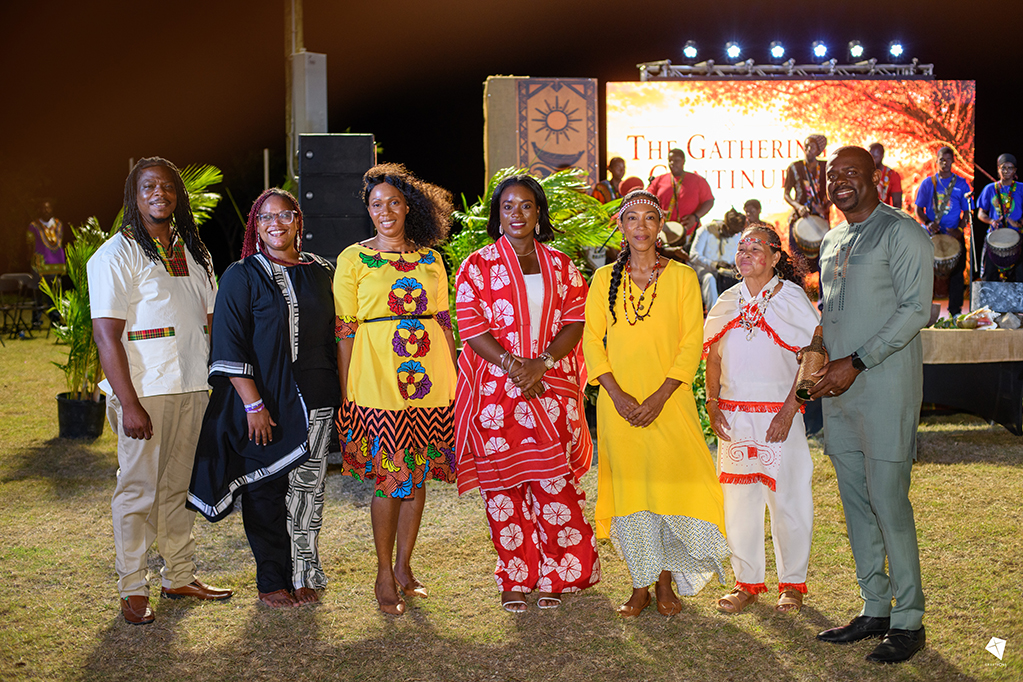
(Department of Cultural Heritage, Saint Kitts, September 01, 2026): A stirring, historic ceremony commemorating the 400th Anniversary of the Kalinago Massacre and the near simultaneous arrival of the first enslaved Africans on Liamigua, named Saint Christopher by the English, was held on August 28, 2026. The event was held at the Challengers Football Field, adjacent to the historic Bloody River. History records that the river ran red for several days following the massacre of thousands of indigenous Amerindians in August 1626, by English and French colonisers.
The “Ancestral Echoes: Remembering the Blood, Honouring the Resilience” ceremony was organised by the Department of Cultural Heritage. Members of the Challengers and surrounding communities joined the Minister responsible for Cultural Heritage, Honourable Samal Duggins; senior government officials; diplomatic envoys; and regional indigenous delegations at the solemn gathering, which served as a monumental milestone in national and regional truth-telling, collective memory, and historical reconciliation. The proximity of the ceremony to the very waterway where thousands of indigenous ancestors laid down their lives provided a profound backdrop for an evening defined by libations, traditional drumming, spiritual healing, and calls for enduring justice.
Representatives from the Kalinago Nation of Dominica and local heritage guardians came together for this significant event, illustrating an unbroken thread of survival over the four centuries. Indigenous leadership highlighted that 1626 was not merely a chapter of destruction, but the crucible from which an indestructible indigenous identity endured across the Caribbean archipelago.
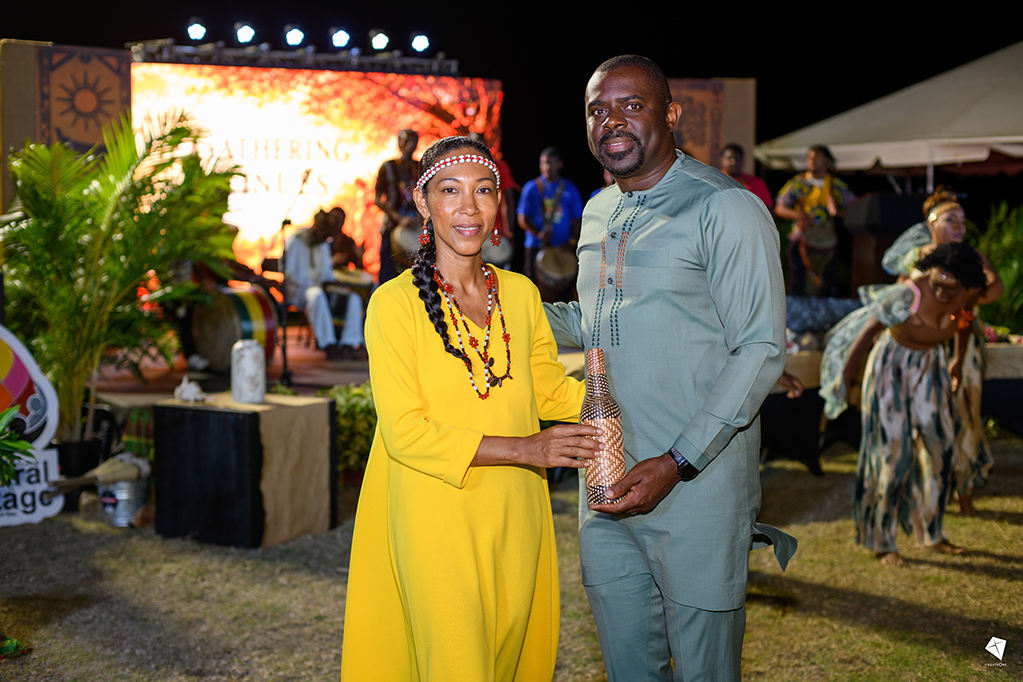
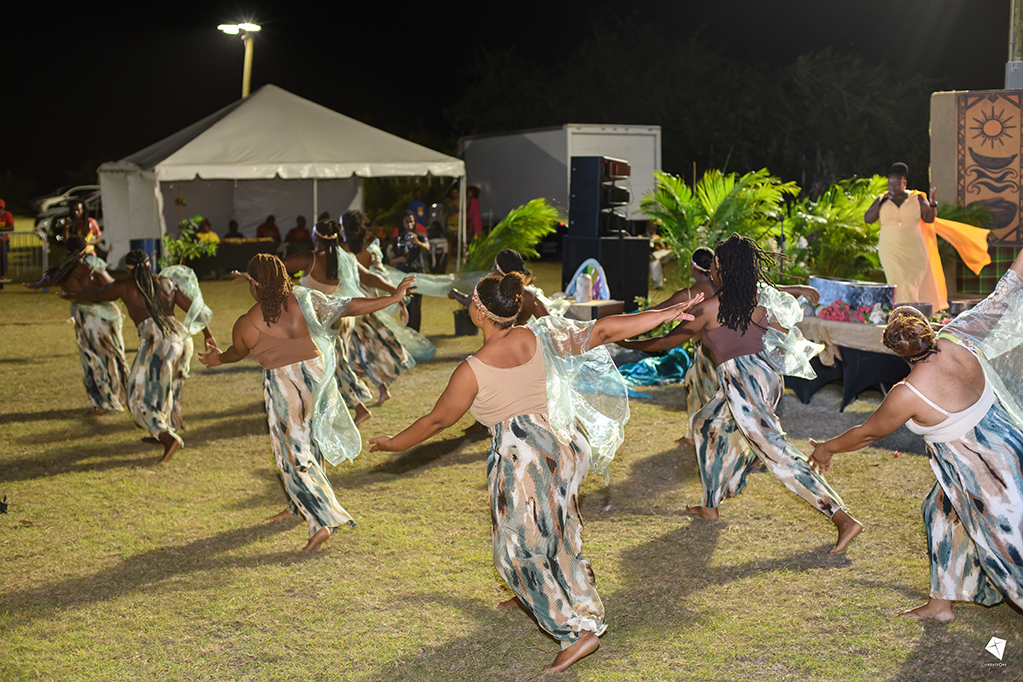
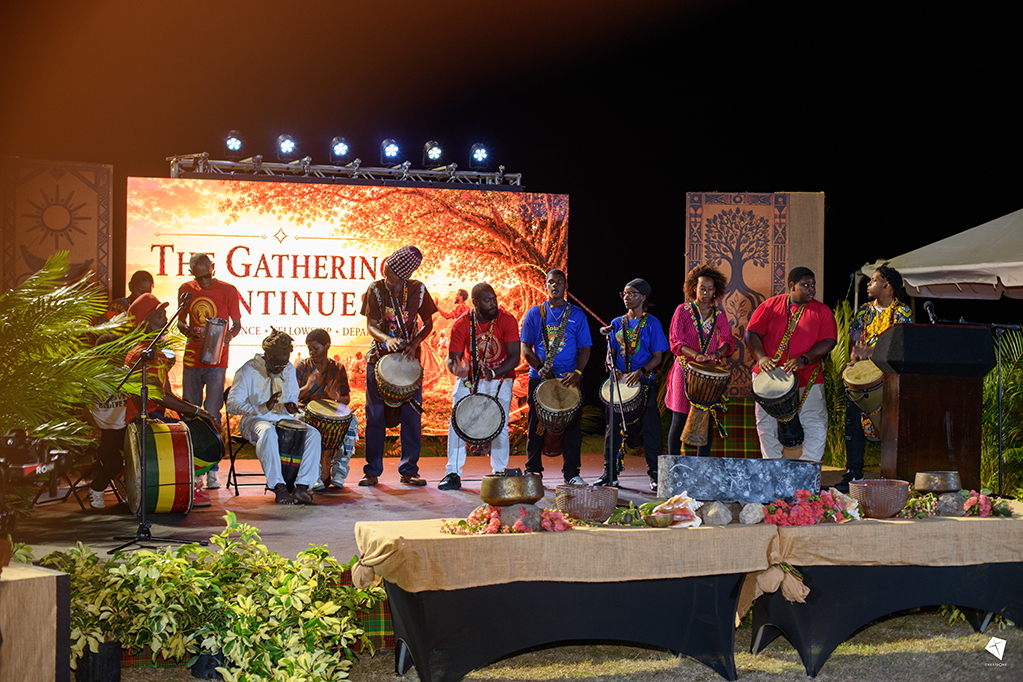
The ceremony harnessed the creative talents and energies of our young creatives and seasoned performers to deliver a moving and inspirational commemoration. Spoken-word performances, traditional Kalinago smoke ceremony and songs, dance, and West African drumming ensembles echoed throughout the valley, symbolically reuniting the two lineages whose blood and sweat nourished the island’s soil.
The Honourable Samal Duggins, Minister with responsibility for Cultural Heritage, noted that “We stand today on ground stained by the blood of ancestors whose sacrifice echoes across four centuries. To honour them is not to remain trapped in historical grief, but to claim our sacred duty to preserve their legacy, teach our youth the unvarnished truth of our genesis, and forge a shared future rooted in dignity, sovereignty, and mutual honour.”
UNESCO Secretary General, Nerys Dockery, underscored the event’s global resonance and emphasised that confronting the raw, unedited reality of 1626 is an essential prerequisite for true educational transformation and UNESCO-backed heritage preservation.
Highlighting ongoing national efforts to submit the Bloody River site for formal cultural landmark protection, officials noted that memory is the ultimate fortress against historical amnesia.
The Department of Cultural Heritage reaffirms its commitment to collaboration with critical local stakeholders and regional partners to ensure that the lessons of Ancestral Echoes extend far beyond a single evening of remembrance.
The department extends its profound gratitude to the community of Challengers, Chief Sanford, and the Kalinago Council, the Saint Kitts and Nevis Independence 43 Planning Committee, the Ministry of Sports, Public Works Department, the St-Kitts-Nevis-Anguilla National Bank, St. Kitts and Nevis National Commission for UNESCO, the Nevis Island Administration, HCMD Urgent Care Clinic, local performers, security services, volunteers, and service providers, and every citizen and guest who attended this transformative national event. Together, Saint Kitts and Nevis has proven that while history may record tragedy, a united people determines its legacy of resilience and peace.
– End –